Save 25% On Your First Autoship Order
Day
:
:
Online since 2002 | +1 833-522-3062
Save 25% On Your First Autoship Order

Pressure ulcers don't develop all at once. They build slowly, quietly, in the hours and days that a body spends pressed against a mattress without enough movement to let blood flow back in. By the time a wound reaches Stage 3 or Stage 4, it's already communicating something important, that is the support surface and repositioning protocol in place weren't enough. That's where lateral rotation mattress therapy enters the picture, not as a comfort upgrade, but as a genuine clinical intervention.
This guide covers how these systems work at a tissue level, what the clinical evidence says about their benefits, how to match the right surface to the right patient condition, and what bariatric caregivers specifically need to know.
Standard hospital mattresses even good foam ones redistribute weight passively. They don't move. And for a patient who can't reposition themselves, a non-moving surface is a ticking clock. The National Pressure Injury Advisory Panel recommends repositioning every two hours as a minimum standard. In practice, that schedule is inconsistently maintained in both clinical and home care settings.
The consequences are well documented. A Stage 3 pressure ulcer involves full-thickness tissue loss reaching the fat layer. A Stage 4 ulcer exposes muscle, bone, or tendon and carries a real risk of osteomyelitis, sepsis, and death. These are not skin problems; they are whole-body events. Managing them requires surfaces that actively work, not just absorb.
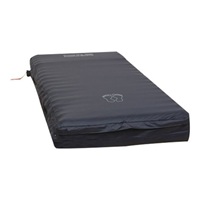
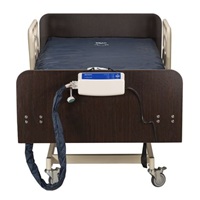
A lateral rotation mattress system uses an air-powered base to tilt the patient's body from side to side, typically reaching 30 to 40 degrees in each direction over a programmable cycle. That motion does several things simultaneously and understanding them helps explain why these surfaces outperform static alternatives for high-risk patients.
| Clinical Mechanism | What It Does | Why It Matters for Stage 3/4 Wounds |
|---|---|---|
| Pressure Redistribution | Cyclically shifts body weight away from bony prominences | Prevents ischemia in vulnerable tissue; allows capillary reperfusion |
| Shear Reduction | Gentle automated rotation avoids drag forces on skin surface | Shear is a leading cause of deep tissue injury; rotation removes this risk during repositioning |
| Microclimate Management | Vapor-permeable covers + air flow regulation control skin temp and moisture | Moist, warm skin maceration accelerates wound breakdown; microclimate control slows this significantly |
| Lateral Postural Drainage | Side-to-side tilt encourages secretion movement from lung bases | Reduces hospital-acquired pneumonia risk which is a major comorbidity in immobile wound patients |
| Interface Pressure Reduction | Air cells deflate and inflate to reduce peak pressure at any single point | Keeps interface pressure below capillary closing pressure (~32 mmHg), the critical threshold for tissue viability |
Of these mechanisms, shear reduction and microclimate management are often underappreciated. Shear forces, the lateral stress on skin tissue when a body slides are responsible for a significant proportion of deep tissue injuries, many of which originate at muscle level and are invisible on the skin surface. Manual repositioning inherently creates shear. Lateral rotation therapy eliminates it by moving the whole body together, in one smooth arc.
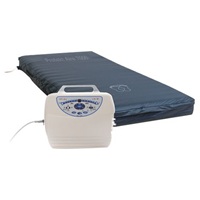
You'll often see low air loss mattresses and lateral rotation systems mentioned in the same context and for good reason. They address overlapping but distinct problems. A low air loss mattress for pressure sores circulates air through tiny perforations in the mattress cover, keeping skin cool and dry, directly targeting the microclimate management factor that makes macerated skin so vulnerable to breakdown.
Lateral rotation handles the mechanical side - movement, shear reduction, and postural drainage. The ideal setup for a Stage 3 or Stage 4 wound patient combines both, a lateral rotation system with integrated low air loss function. Many current systems offer this as a single unit. For patients with less severe wounds, a low air loss overlay alone may suffice.
Note - NPUAP/EPUAP guidelines recommend placing patients with existing Stage 3 or Stage 4 wounds on a powered active support surface. A low air loss–only mattress generally meets this threshold for healing. A lateral rotation system is indicated where repositioning frequency cannot be maintained or where pulmonary complications are co-present.
No single product prevents bed sores. Pressure ulcer prevention requires a bundled approach. But the support surface is the foundation everything else is built on. Here's what works -
Not every patient needs the same surface. Overprescribing increases cost and complexity, under prescribing causes harm. Use this guide as a starting point. Always confirm with the treating physician or wound care nurse.
| Patient Condition / Profile | Recommended Mattress Type | Key Feature Needed |
|---|---|---|
| Bed-bound, moderate pressure ulcer risk (Braden 13 - 18) | Alternating Pressure Mattress (APM) | Cyclical pressure redistribution; active surface prevents new wounds |
| Stage 3 or Stage 4 pressure ulcer already present | Lateral Rotation + Low Air Loss Overlay | Offloads existing wound; microclimate management accelerates healing |
| ICU / ventilated patient, high aspiration or pneumonia risk | Lateral Rotation Mattress Replacement System | Continuous rotation 30 - 40° aids pulmonary secretion drainage |
| Spinal cord injury, complete immobility | Full Lateral Rotation System + Low Air Loss | Maximum rotation + moisture wicking; autonomic dysreflexia safe settings |
| Bariatric patient (>250 lbs) at high ulcer risk | Bariatric Lateral Rotation Mattress (500 - 1000 lb capacity) | Wider surface, reinforced air cells, higher weight distribution; standard mattresses WILL bottom out |
| Post-surgical, short-term bed rest, low-moderate risk | Low Air Loss Mattress Overlay | Microclimate control + pressure relief without full rotation needed |
| Home care patient, caregiver fatigue, limited repositioning capacity | Home-Grade Lateral Rotation System | Reduces manual turning burden on caregiver; 2-person lift alternative |
The bariatric pressure ulcer patient represents one of the highest-risk and most underserved groups in wound care. Standard mattresses even powered ones are typically rated for patients up to 250–300 lbs. Beyond that threshold, air cells bottom out, meaning the patient effectively sinks to the hard foam base, negating all the pressure relief the system was designed to provide.
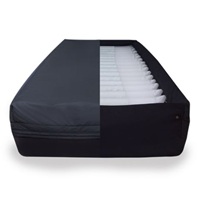
A true bariatric lateral rotation mattress addresses this with wider sleep surfaces (36–42 inches vs. standard 35 inches), reinforced air cell architecture rated for 500 to 1,000 lbs depending on model, and adjusted rotation geometry that accounts for a larger body mass. The clinical stakes are high: bariatric patients have significantly higher rates of pressure ulcer development due to reduced mobility, higher skin-to-skin friction in skin folds, and metabolic factors that slow tissue repair.
If you're searching for a bariatric hospital bed mattress with lateral rotation capability, look specifically for systems that list a verified weight rating, a bariatric-width specification, and clinical evidence of use in this population. Our customer care team at HealthProductsForYou can help match you to the right bariatric surface for your specific care setting.
A lateral rotation mattress isn't just a piece of equipment, it's a round-the-clock clinical ally for patients who can't protect their own skin. The combination of shear reduction, pressure redistribution, microclimate management, and consistent postural change makes these systems among the most evidence-supported interventions available for serious pressure ulcer prevention and treatment.
Whether you're a wound care nurse making procurement decisions, a family caregiver trying to protect a loved one at home, or a clinician evaluating options for a bariatric patient with an existing Stage 4 wound, the right surface matters more than most people realize. Get it right from the start.
Disclaimer: All content found on our website, including images, videos, infographics, and text were created solely for informational purposes. Our reviewed content should never be used for the purpose of diagnosis or treatment of any medical conditions. Content shared on our websites is not meant to be used as a substitute for advice from a certified medical professional. Reliance on the information provided on our website as a basis for patient treatment is solely at your own risk. We urge all our customers to always consult a physician or a certified medical professional before trying or using a new medical product.


Hunaid Germanwala, a seasoned digital marketer and content creator at HPFY since 2014, believes in the power of "health ...
How To Increase Iron Levels Quickly
It’s a question that must have puzzled you like many others. Iron is essential in hemoglobin production and its inadequate levels can negatively impact your health. Dive into this informative article to explore top iron-rich foods that can help you fight iron deficiency.
10 Best Coccyx Cushions for Tailbone Pain
If you're like most people, you spend about 8 to 10 hours sitting every day. However unhealthy, it is part of life for many, and can cause tailbone pain. Coccyx cushions can help alleviate this pain. Click to read more and find the perfect coccyx cushion for your tailbone pain.
5+ Best Adult Diapers for Fecal Incontinence
Dealing with fecal incontinence can be challenging, but you're not alone. Read this article and navigate through discreet and effective solutions that help you manage fecal incontinence and let you live life on your terms with confidence and comfort.
Top 5 Best Reviewed Nebulizers of 2024
Need an effective and affordable nebulizer? Look no further, in this article we offer 5 of our best reviewed nebulizers that are loved by our customers. Click to read more and find the perfect nebulizer for all your respiratory needs.
10 Best Penis Pumps For Erectile Dysfunction
For anyone dealing with erectile dysfunction, penis pumps serve as a great way to manage it. But with so many products available, determining the best one for your needs can be challenging. To assist you in refining your choices and making an informed decision, here are our top 10 options, recognized for their effectiveness and safety.